
Strong enough for your job
In short
- The goal people mention first is often not the one that really matters. It pays to ask further.
- If you stand, walk or lift all day, you train not just for the mirror but to get through your working day.
- So train for what your job asks of you: getting up, bending, lifting, turning, and keeping that up until the end of the day.
When I ask someone at an intake what their goal is, I often hear this first: losing a few kilos. That is fine. It is concrete and you can measure it.
But when I ask further, something else often comes out. Someone wants to get through the working day without their back playing up. Or wants to have energy left for home after a long day. That is a goal too. And often a more important one.
The first goal is often not the real goal
At an intake I always ask: what matters most to you? And how important is that, on a scale from zero to ten?
The answer still surprises me regularly. Losing weight then gets a six or seven, for example. But the goal someone is really walking around with, for example moving easily at work, gets a nine or a ten. Then I ask why. And then I hear the real story.
I don't ask that question just for the sake of it. A goal you give a ten keeps you going on days you do not feel like it. A goal you give a seven does not always.
Being fit for your job is a goal too
Many people over forty have jobs where they are on their feet all day. In a shop, in hospitality, in a school, in healthcare. You walk a lot, you stand a lot, you lift or you bend.
At the start of the day that is fine. By the end you feel it. Your feet are tired, your legs feel heavy, your lower back starts to nag. It does not really hurt, you are mostly tired. And if you have a few shifts in a row, it does not get better.
You do not have to put that down to getting older. Often your job asks more than your body can comfortably handle right now. You can work on that.
What that means for your training
If you train for your job, I first look at what that job asks of you. Someone who lifts a lot needs different things from someone who walks all day.
A few things come back almost every time:
- Strength in your legs and hips. Those are the muscles meant to do the heavy work when you get up, bend and lift. If they do not pull their weight, your lower back often ends up doing more than it should.
- A strong core. So you stay stable when you turn and lift.
- Mobility with strength added. Many people think flexibility means stretching. But it is also about holding a position and getting back out of it with strength. Bending down deep and standing up straight again, with something in your hands.
- Muscular endurance. Your job does not last ten minutes. Your body has to keep it up for a whole shift.
And I look at how someone moves right now. An old injury, a knee that starts to nag quickly, a back that flares up quickly: you start gently with that, and you build it up. Weight loss can come along with it. But it is no longer the main goal.
You can read more about how I build things up in Moving is not the same as building.
What you can do with this yourself
- Ask yourself: what do I want to find easier in four months? Write it down as concretely as you can. Not "get fitter", but "get through an evening shift without my back playing up".
- Give that goal a score from zero to ten. Is it lower than an eight? Then keep looking for what would be a ten for you. That goal helps you keep going.
- Train for what you do all day. Getting up from a chair, picking something up from the floor, lifting something and putting it away. Do those movements consciously, and slowly make them heavier.
A fitter body and coping better with your job often go together. It is usually the same goal, just put differently.
Frequently asked questions
I'm on my feet all day already. Do I still need to train?
I have an old injury. Can I still train for my job?
Is mobility the same as flexibility?
Read next
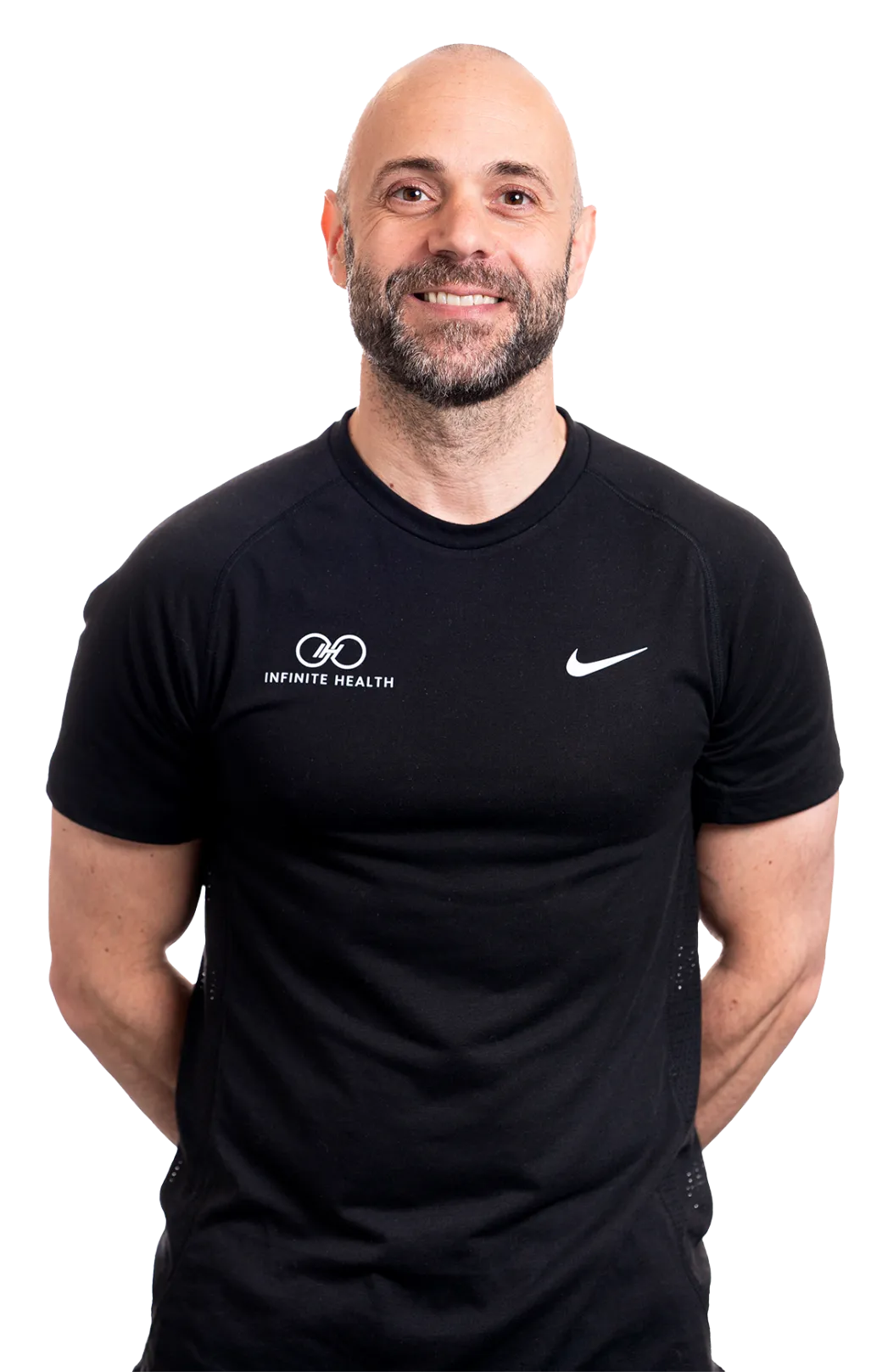
Remko Opdam
Personal trainer in Haarlem with 10 years of coaching experience, certified in all three Mylogenics modules and as a T.O.P. Trainer A with Overload Worldwide. Specialised in strength training and nutrition for people over 40. He always looks first at what your body can handle.
Want to know what your job asks of your body? Book a free intake, no obligation.