
You already know what to do. So why doesn't it happen?
In short
- Most people over 40 do not have a knowledge problem, they have a structure problem.
- Motivation alone does not survive the days you do not feel like it. A system does.
- Coaching works mainly because it adds structure, accountability and a fixed rhythm.
I spoke to a woman recently during a first conversation. She is going through the menopause, she has a demanding job, and she said something I hear almost every week:
She knew strength training matters. She knew food affects her energy and her weight. She was not short of information. Not short of good intentions either. And not short of motivation: she rated the importance of her health a solid eight out of ten herself.
Still it kept slipping. Spells where she was doing well, followed by weeks where all of it disappeared. And since the menopause started she felt her body cooperating less as well: less energy, weight harder to control, no fixed routine left.
The problem is not knowledge
This is the pattern I see in almost everyone over 40 who sits down with me. Nobody arrives asking "what is a squat?". They have all read the articles, watched the videos, maybe even followed a plan before.
The problem sits elsewhere. It sits in the fact that you are trying to do all of it alone :
- Without a structure someone has thought out for you
- Without anyone counting on you when you do not feel like it
- Without a system that keeps you on track on the hard days too
On a good day you need nobody. But getting fitter does not happen on your good days. It happens on the days when you are tired, when work is heavy, and the sofa is more appealing than the gym. Those are exactly the days you lose the negotiation with yourself.
Why I advise twice a week, not once
In that conversation I advised her to train twice a week. Not because two sessions earn me more, but because I know from experience what once a week does: it becomes an island in your week. Cancelling one appointment feels like nothing, and two weeks later the rhythm is gone.
Two fixed slots a week works differently:
- Two moments where someone is counting on you
- Two moments where you do not have to negotiate with yourself again
- Enough frequency to genuinely get stronger, including through the menopause
The training stops being a decision. It is simply Tuesday.
"But I already pay for the gym"
This is the thought almost everyone lands on, including the woman in this conversation. You already have a membership. Why invest in coaching on top of it?
The honest answer: if your membership is working, keep at it. But look back for a moment. How long have you had it? And what has it brought you so far?
A membership gives you access to equipment. It does not give you a plan, technique or progress, and above all it gives you no reason at all to show up on the days you do not feel like it. That is not a criticism of you. It is simply not what a gym membership is built for.
What you can do with this yourself, today
You do not have to buy anything to get something out of this. Three things you can do yourself this week:
- Put your sessions in as appointments. Fixed day, fixed time, in your diary. Not "train sometime this week", but Tuesday 18:00 and Saturday 09:00.
- Tell someone about it. A friend, your partner, a colleague. Someone who asks how it went. Accountability does not have to be expensive, it just has to exist.
- Lower the bar for bad days. The rule is not "train perfectly", the rule is "turn up". A mediocre session that happens is worth more than a perfect one you skip.
And if you notice you have tried this before and it keeps fading, that says nothing about your willpower. It says you have a structure problem, not a knowledge problem. That is good news, because structure can be fixed.
Frequently asked questions
Why can't I keep it up, even though I know what to do?
Source: meta-analysis on habit formation and physical activity (IJBNPA) →
What can I do myself if I keep falling back into old patterns?
How long does it take before training becomes a habit?
Read next
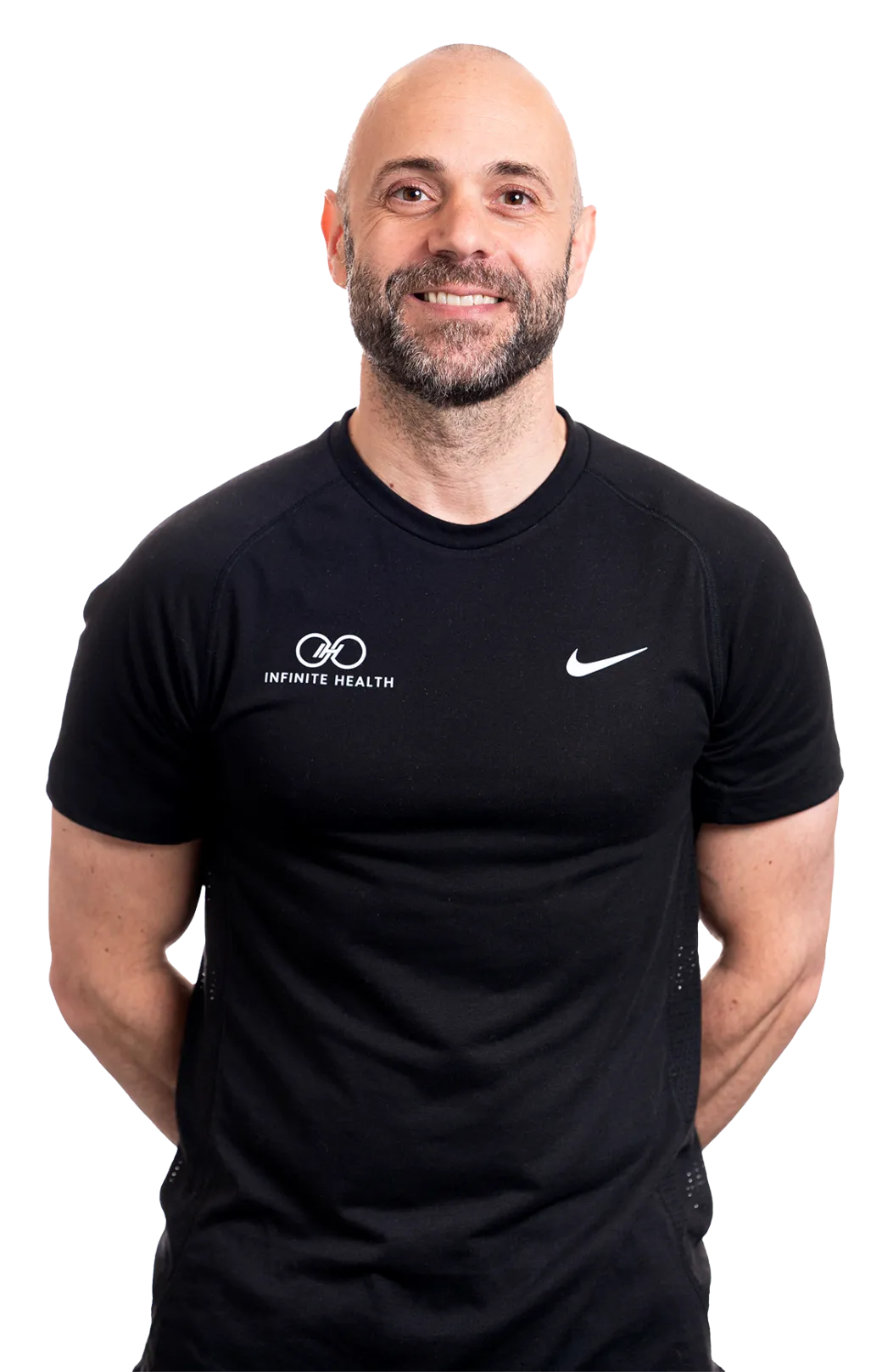
Remko Opdam
Personal trainer in Haarlem with ten years of coaching experience, certified in all three Mylogenics modules and as a T.O.P. Trainer A with Overload Worldwide. Helps people over 40 build strength, energy and control over their body in 17 weeks, in English or Dutch.
Wondering whether coaching is right for you? Book a free intake, no obligation, or read more about personal coaching for women over 40 in Haarlem.